Direct Selling Front End Migration
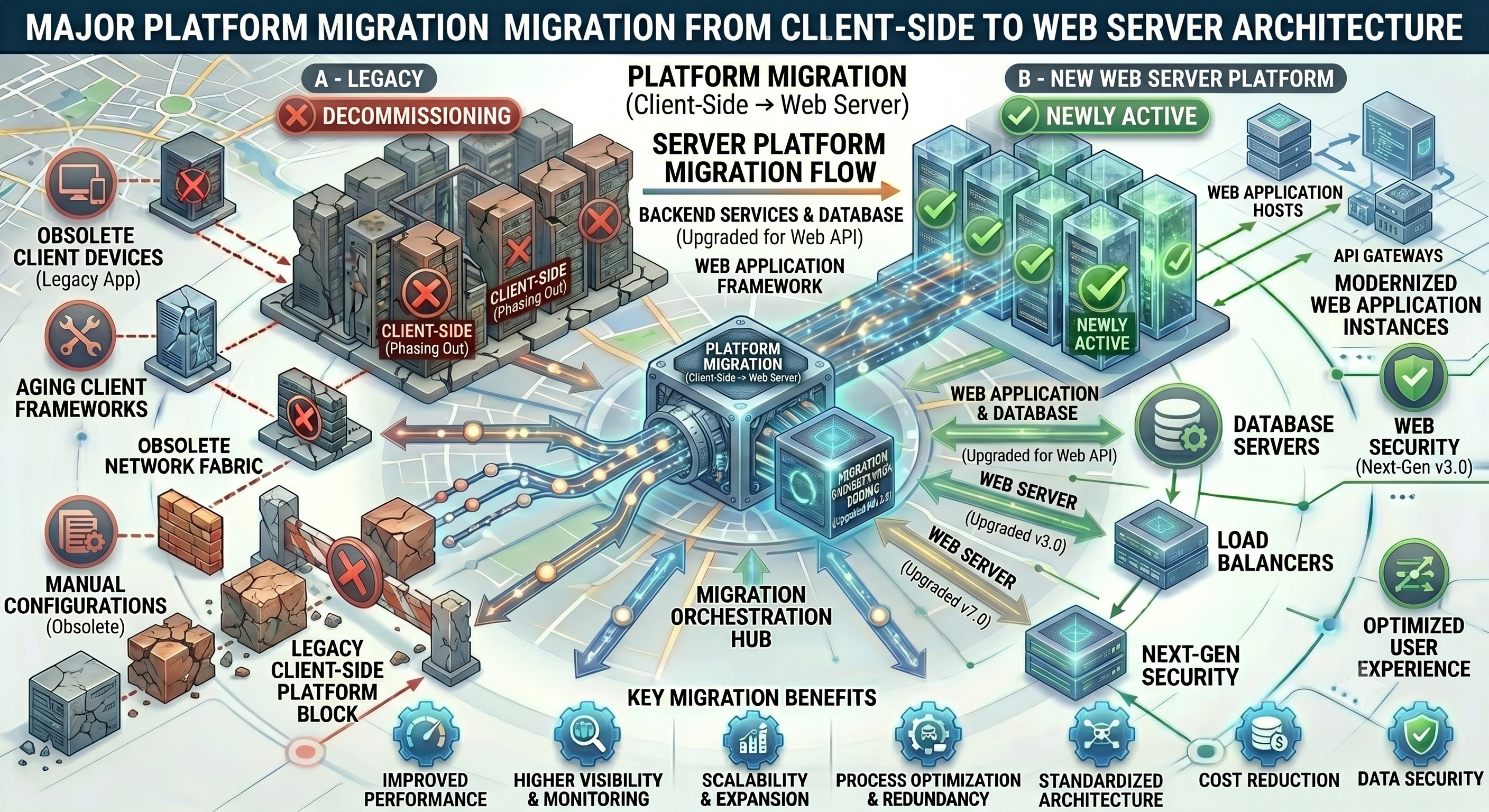
DIMAS Upgrade project (Distributor Information and Management System), leading a strategic digital transformation to modernize the company’s core distributor platform. The initiative migrated a legacy client-server system into a centralized web-based architecture, supporting more than 90 distributors across Indonesia. The transformation was executed over a two-year period using a phased rollout approach, enabling controlled adoption while ensuring business continuity across all distributor operations.
Role / Contribution
Initiator & IT Manager
Technology Stack
Compliances & Standards
PMP/ACP
IT Audit Compliance (SOX)
Payment Gateway
SDLC
The Challenge
The transformation required a fundamental shift in system architecture and distributor operating model across a wide geographic footprint.
Key challenges included:
- Migrating from a legacy client-server system to a web-based platform without disrupting ongoing distributor operations.
- Eliminating synchronization issues between the head office system and more than 90 distributed client servers.
- Ensuring consistent data integrity and system stability during phased migration across multiple distributor locations.
- Managing varying levels of technical readiness across distributors nationwide.
- Maintaining uninterrupted business operations for order processing, reporting, and financial transactions during transition.
- Coordinating multiple stakeholders including internal IT, business teams, vendors, and distributor representatives.
- Designing a scalable architecture capable of supporting future digital integrations and business expansion.
Strategic Solution
A structured modernization and phased migration strategy was designed and led to ensure a successful transformation.
Key initiatives included:
- Initiated and led the end-to-end digital transformation program as IT Manager and project initiator.
- Migrated the DIMAS platform from a distributed client-server architecture to a centralized web-based system.
- Implemented a phased rollout strategy over two years, gradually migrating distributors to the new platform to minimize operational risk.
- Eliminated dependency on local distributor servers by centralizing application hosting and data management.
- Redesigned system architecture to ensure real-time data consistency and reliable synchronization across all users.
- Coordinated with vendors and internal IT teams to implement a scalable, secure, and future-ready platform.
- Enabled seamless integration capabilities with external systems such as Power BI, e-commerce platforms, online payment gateways, and BCA API, supporting future business expansion.
- Simplified distributor IT requirements by removing the need for local server management, requiring only internet-connected devices.
- Established structured training, onboarding, and support processes to ensure smooth adoption across all distributor locations.
Impact & Results
The DIMAS Upgrade successfully transformed the organization’s distributor management ecosystem into a scalable digital platform.
Key outcomes included:
- Successfully migrated 90+ distributors from a client-server model to a centralized web-based system over a 2-year phased rollout.
- Eliminated long-standing synchronization issues between head office and distributor-side systems.
- Achieved centralized, real-time data visibility and significantly improved reporting accuracy across the organization.
- Enabled seamless integration with modern analytics and business platforms such as Power BI and future e-commerce systems.
- Established a flexible architecture supporting rapid integration of payment systems, APIs, and new digital business processes.
- Reduced IT operational burden at distributor level by removing the need for local server infrastructure and technical maintenance.
- Improved scalability and agility for future business expansion and digital innovation initiatives.
- Strengthened decision-making capabilities through consolidated and easily accessible business data.
- Generated an estimated annual revenue impact of USD 50M through improved efficiency and enhanced digital capabilities.
- Successfully delivered the transformation under a controlled, low-risk phased migration strategy with sustained business continuity.