Global ITSM Transformation – BMC Helix Remedyforce Implementation
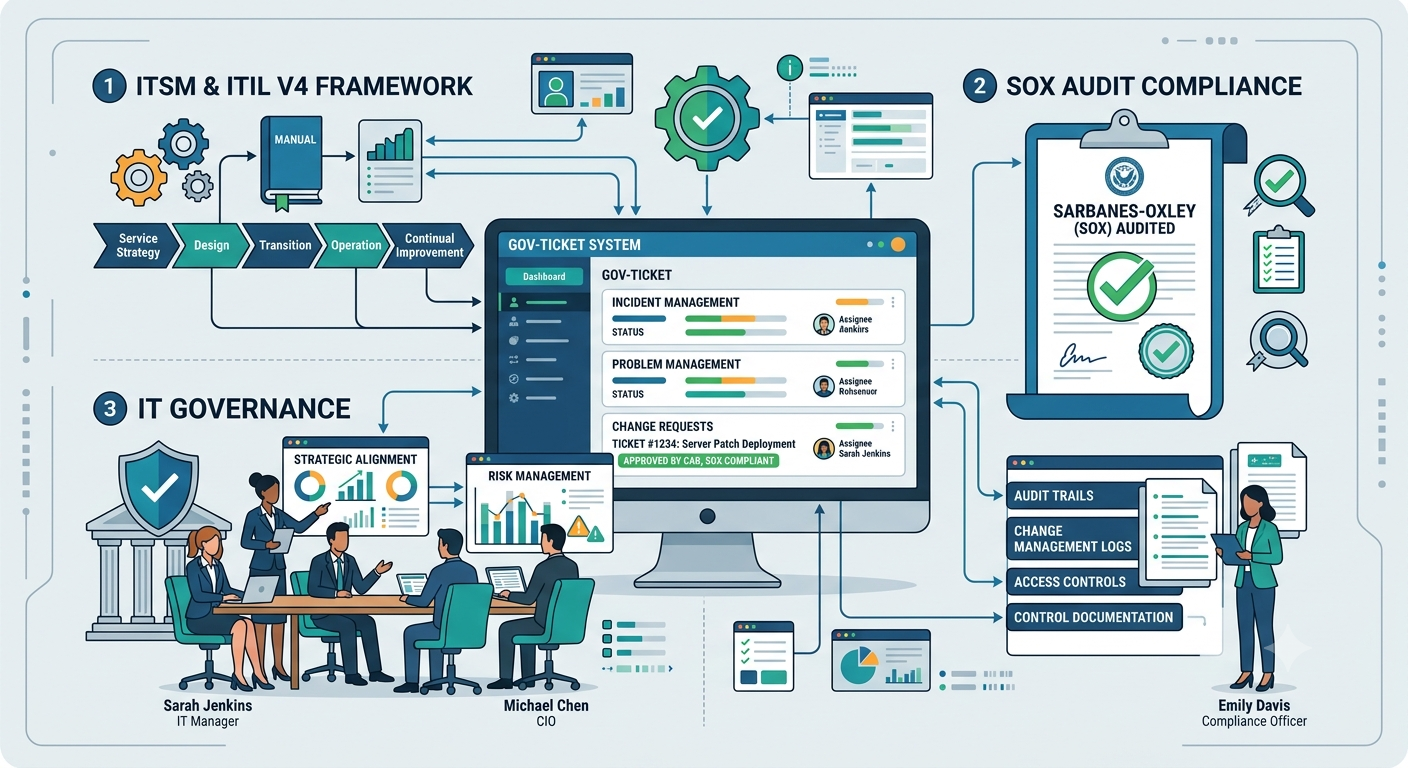
Managed the local implementation of a global IT Service Management (ITSM) transformation initiative that migrated the organization from a legacy local ticketing application to BMC Helix Remedyforce, the enterprise-standard ITSM platform adopted across multiple countries. As the Local Project Manager, I acted as the primary liaison between local business stakeholders, the Global Program Team in the United States, and the implementation vendor in India. The project required aligning local operational processes with global ITSM governance while ensuring business continuity, regulatory compliance, and successful user adoption. The implementation included Incident Management, Service Request Management, Change Management, Problem Management, Service Catalog, and standardized approval workflows, enabling a consistent service management framework across global operations.
Role / Contribution
Local Project Manager
Technology Stack
Compliances & Standards
Enterprise ITSM
IT SOX Audit
ITIL
The Challenge
- Coordinated project delivery across three geographically distributed organizations involving local business teams, the Global Program Team (US), and the implementation vendor (India).
- Managed communication and decision-making across different time zones, cultural backgrounds, and working practices.
- Bridged differences between local business requirements and globally standardized ITSM processes.
- Tailored workflow configurations and approval processes to meet local operational needs while maintaining alignment with global governance.
- Managed dependencies between local activities and the global rollout schedule to ensure timely delivery.
- Drove stakeholder engagement and organizational readiness throughout the migration from the legacy ticketing system.
- Minimized business disruption during cutover, data migration, and post-production stabilization.
Strategic Solution
- Established effective communication governance through regular project meetings, executive status reporting, risk reviews, and cross-functional workshops involving local, regional, and global stakeholders.
- Served as the single point of coordination between the local organization, Global Program Team, and offshore implementation vendor to facilitate timely decision-making and issue resolution.
- Conducted comprehensive gap analysis between existing local processes and the global Remedyforce operating model to identify required workflow adaptations.
- Collaborated with global process owners to configure approval workflows, service catalogs, user roles, and operational procedures that satisfied both enterprise governance and local business requirements.
- Coordinated User Acceptance Testing (UAT), production readiness assessments, end-user training, and deployment activities to ensure a successful go-live.
- Applied proactive project governance by managing project scope, risks, issues, dependencies, and change requests throughout the implementation lifecycle.
Impact & Results
- Successfully delivered the Indonesia rollout of the global Remedyforce implementation within the planned deployment framework.
- Replaced the legacy local ticketing system with a standardized enterprise ITSM platform aligned with global operating standards.
- Improved consistency of Incident, Change, Problem, and Service Request Management processes across local and global support organizations.
- Strengthened collaboration between local IT teams, global support functions, and external implementation partners through standardized service workflows.
- Increased operational visibility using centralized dashboards, SLA monitoring, and standardized reporting capabilities.
- Reduced manual effort through workflow automation and standardized approval processes.
- Enhanced organizational readiness and user adoption through structured training, stakeholder engagement, and change management activities.